Liberals vote to keep oil and gas production cap
Environment manager Megan Nichols told MPs the cap would have ‘minimal impact’ on the economy.

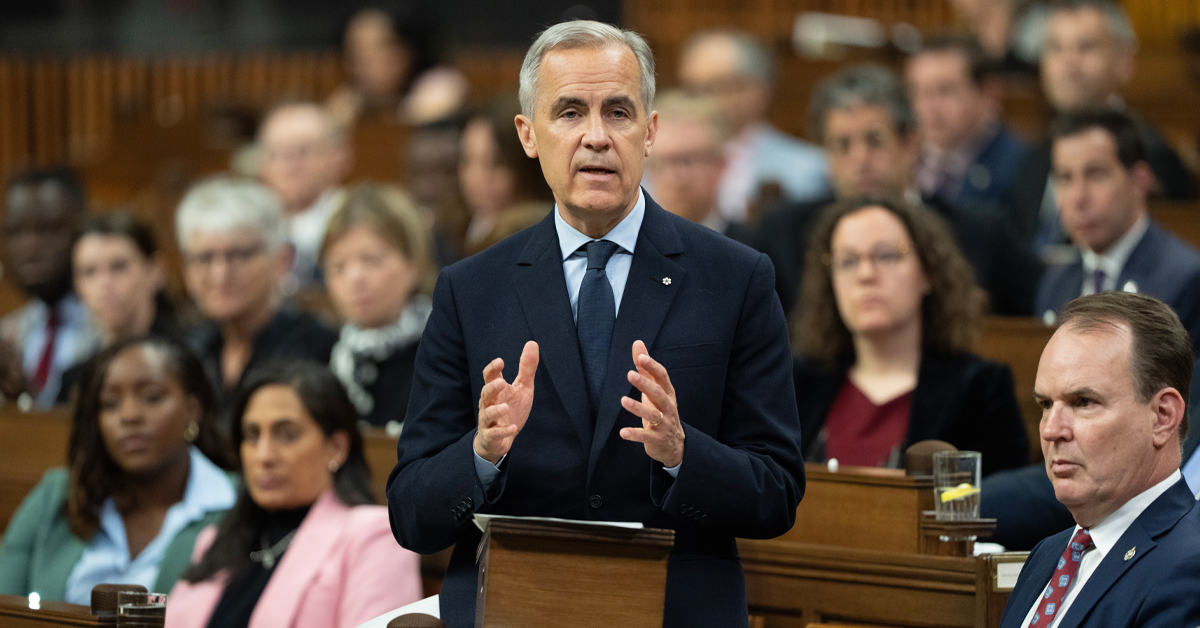
The House of Commons passed cabinet’s oil and gas production cap Tuesday in a 92-140 vote, which the Department of Environment estimates will cost at least $3.4 billion and 3,400 energy jobs.
On Tuesday, Opposition Leader Pierre Poilievre attributed Canada's pipeline issues to federal bureaucracy, arguing that Liberal policies complicate rather than resolve the problem. This prompted the Conservatives to bring a motion to axe the cap.
Liberal MP Corey Hogan, parliamentary secretary for natural resources, rejected the motion, calling it “Conservative games” and arguing they offer no alternative to the Liberals' climate investment plan.
However, foreign investors withdrew $43.7 billion from Canada in the second quarter of 2025, mirroring outflows in the first quarter, reported Statistics Canada.
“We believe that if there are Liberal laws and bureaucracies roadblocking development, then get rid of those Liberal laws and bureaucracies,” Poilievre said in debate.
Canada's current regulations, announced by then-prime minister Justin Trudeau at a 2021 UN climate change conference, aim to cap oil and gas emissions at 27% below anticipated 2026 levels, according to Blacklock’s.
Commons votes 192-140 to uphold oil & gas emissions cap that @EnvironmentCa says will cost billions and some 3,400 jobs: "Here is where we disagree." https://t.co/NZD6olsOyv #cdnpoli @juliedabrusin pic.twitter.com/CRNcEnT2HJ
— Blacklock's Reporter (@mindingottawa) September 24, 2025
On Monday, Department of Environment manager Megan Nichols told MPs that the cap would have "very minimal impact," despite her department's research predicting thousands of job losses.
This follows 2024 testimony from another department manager, stating the carbon tax has minimal impact in reducing emissions.
Proposed regulations, while not in force yet, aim to cut emissions by 3.4 million tonnes (2025-2032), preventing $4 billion in ‘climate change’ damages. With estimated costs of $3.3 billion (plus $219 million in administrative fees), the net cost is projected at $428 million.
Alison McDermott, assistant deputy environment minister, would not discuss whether the cap will be enforced.
Mark Carney speaks on his master plan to have investments in the "decarbonization" of Canada happen throughout all sectors with the help of taxpayer dollars.
— Rebel News (@RebelNewsOnline) September 7, 2025
PM: "climate competitiveness, as part of our global industrial competitiveness strategy," pic.twitter.com/Sy04hRxubB
On September 5, Prime Minister Mark Carney vowed to “decarbonize” Canadian infrastructure. “Our perspective on climate competitiveness is to develop the competitiveness of our industries,” he told reporters.
Last March 20, Alberta Premier Danielle Smith warned against Carney's “net-zero” obsession, saying he could be worse than the previous prime minister and risk national unity.
Smith views the oil and gas cap as an “intentional attack” on Alberta's economy and jurisdiction, directly impacting 213,000 jobs. She accused the federal government in 2023 of “singling out” the sector, risking billions in investments.
A CAPP-commissioned study found that a 40% emissions cut by 2030 would lead to a million fewer barrels/day, 51,000 job losses, and $75 billion in lost capital investment.
Most Canadians support building new oil and gas pipelines (91%) and LNG terminals (82%) to counter U.S. tariffs, a recent poll showed.
Alex Dhaliwal
Journalist and Writer
Alex Dhaliwal is a Political Science graduate from the University of Calgary. He has actively written on relevant Canadian issues with several prominent interviews under his belt.
Featured Stories

06:06


COMMENTS
-
 Bernhard Jatzeck commented 2025-09-25 21:39:42 -0400We all know that this is meant to punish Alberta. It’s an on-going revenge for rejecting PET in the 1972 election.