Northumberland County Council approves Cobourg warming room
The public remains deeply divided on the issue, with many having urged Council to avoid another Cobourg warming hub after the chaos surrounding the previous one led to its closure.

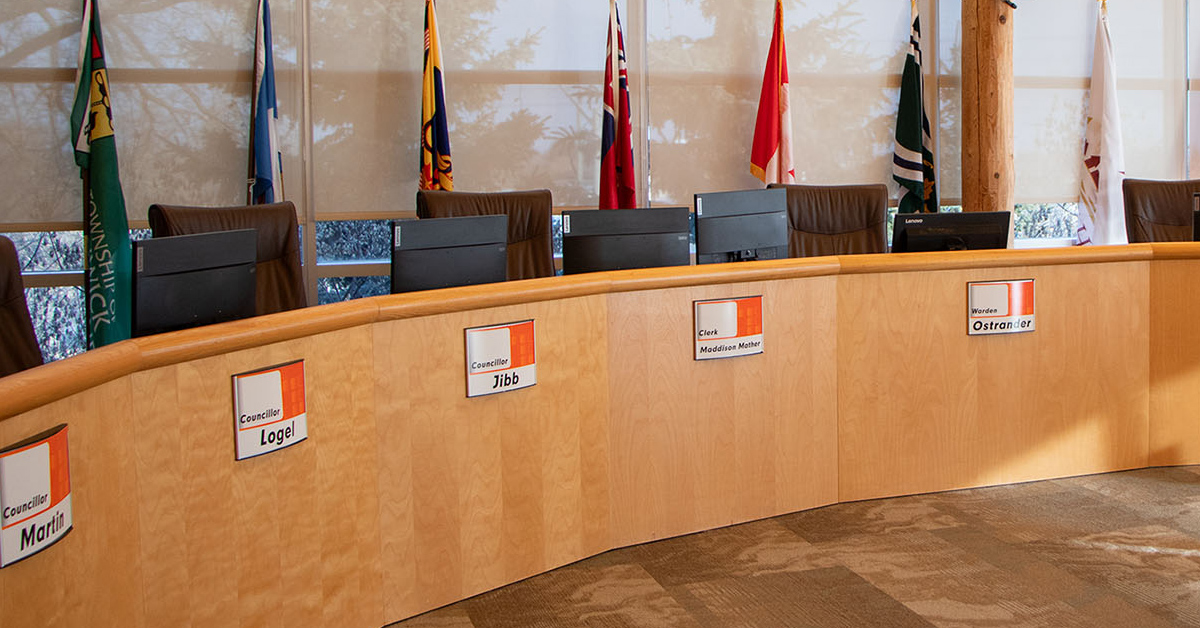
Cobourg’s upper-tier municipality, Northumberland County Council, has voted to convert its own Council Chambers at 555 Courthouse Road into this winter’s overnight warming room.
The move comes as temperatures drop and community tensions mount over how to direct roughly 30 to 40 chronically homeless residents, many with addiction and mental health challenges, out of the cycle perpetuating street survival, substance dependency, and public safety concerns.
Council’s decision followed weeks of debate, hundreds of letters, and deep community division.
Port Hope Mayor Olena Hankivsky stressed that every councillor wants a warming room. The question has never been if — only where, she said.
A staff report prepared by Rebecca Carman, Associate Director of Housing and Homelessness — whose annual salary is approximately $140,000 — outlined four potential sites for the winter warming room. Following the County’s designation requirements, any Cobourg-based location had to be on County-owned property.
The shortlist included two such sites in Cobourg, one in Colborne, and Fenella Hall in Roseneath. After a brief but pointed debate, Warden Brian Ostrander’s motion to use the County’s own headquarters at 555 Courthouse Road carried, directing staff to operate the overnight hub nightly from 8 p.m. to 8 a.m., running as early as November 1 through to March 31.
However, a County press release noted that while Council approved an opening date of November 1, staff will need additional time to secure staffing, equipment, and meet Cobourg’s bylaw requirements. The warming room is now expected to open within two to four weeks, “with a goal to open the doors as quickly as possible,” it reads.
The County received well over one hundred pieces of correspondence on the issue, which reflected a stark split across the community. Roughly 60% of communication opposed placing the hub in Cobourg, arguing the town is already overburdened by homelessness services and the challenges that seem to come with them.
“Cobourg has done its share,” wrote one resident. “It’s time for other municipalities to step up,” said another.
Cobourg ON encampment takes hold, despite multiple shelter services available & historic 48% increase in provincial funding to prevent homelessness —
— Tamara Ugolini 🇨🇦 (@TamaraUgo) October 26, 2023
~$2 million to Northumberland County alone
Coincidentally violent crime is up ~42% in the areahttps://t.co/10R46kQiZP pic.twitter.com/0gMnKpeltW
Other communication sought to remind the council that the previous low-barrier warming/cooling hub had invited crime, public drug use, and fear among residents.
Crowd of approx 450 erupts in supportive applause following this video depicting the absolutely vile behaviour the community surrounding 310 experiences
— Tamara Ugolini 🇨🇦 (@TamaraUgo) June 17, 2025
“We call police 1-5 times every single day” says this business owner pic.twitter.com/fiMKEXiZ0b
Rural voices, particularly from Roseneath, fiercely opposed the Fenella Hall proposal, citing safety concerns, lack of emergency services, and community disruption.
Meanwhile, a strong minority — about 30% of submissions — urged compassion over caution. “Lives will be lost without it,” one submission dramatically warned.
According to the County’s financial summary, the warming room will cost approximately $218,000 to operate this winter — including $150,000 for security staffing, $25,000 for cleaning, and $15,000 for basic program delivery.
Councillor Lucas Cleveland, Mayor of Cobourg, advocated for adopting the “Durham Model” — a framework where the warming centre serves strictly as an overnight shelter, not a drop-in hub offering broader “wraparound” services. He also urged that the County manage operations directly to ensure stronger consistency, oversight, and accountability — qualities many in the community have been lacking in past arrangements with third-party providers.
Cobourg Mayor Lucas Cleveland opens tonight’s Town Hall Meeting at the CCC to hear grievances from local residents regarding the crime, chaos and disorder descending on the downtown core in wake of expanded services at 310 Division Street, an emergency low barrier shelter run by… pic.twitter.com/khkDvW2EGT
— Tamara Ugolini 🇨🇦 (@TamaraUgo) June 17, 2025
Notably, the former warming and cooling hub in the basement of Transition House’s expanded shelter operation in Cobourg closed in July, after the surrounding neighbourhood descended into escalating chaos and crime.
A fifth option, previously proposed by Jordan Stevenson, founder of the Integrated Homelessness Addiction Response Centre, appeared to gain little traction in Council’s final decision. Stevenson shared that the strain on taxpayers is enormous, no matter how you view the opioid and homelessness crisis, from healthcare costs to law enforcement.


COMMENTS
-
Bruce Atchison commented 2025-10-29 19:47:20 -0400How brilliantly stupid! Let these councillors find out personally how dangerous and damaging these addicts can be. A MUCH better way is to adopt Alberta’s recovery plan.